
ⴰⵢⵜ ⵄⵟⵟⴰ · Ayt Ɛeṭṭa · آيت عطا
The Aït Atta
An Amazigh confederation of south-eastern Morocco, centred on the Saghro, organised in “five fifths” and governed by its own customary law.
Nomad camp in the mountains (1955) — Nationaal Museum van Wereldculturen (Tropenmuseum, Amsterdam), CC BY-SA 3.0
The components of the confederation
The five “fifths” (khmas) described by the sources, presented at the same level. How rich an entry is depends on the sources available, not on the importance of the group.
Khoms 1
Khoms of the Aït Ouallal and Aït Ounir2 tribes · 1,600 households (1936)
First of the five khmas in Spillmann's table. It brings together two tribes that tradition calls “sisters” and that the officer counts, with the Aït Ouahlim, among the oldest of the confederation. They hardly get on and now fight only in the Draa, where the Aït Ounir of Tinzouline and Ternata oppose the Imsoufa of Fezwata. Together they make up the bulk of the Aït Atta n'Oumalou of the Middle Atlas.
Khoms 2
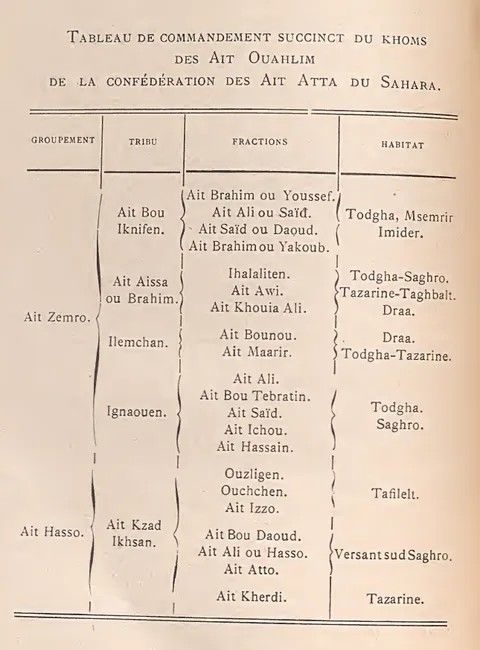
Khoms of the Aït Ouahlim4 tribes · 2,200 households (1930)
The most populous of the five khmas around 1930. Beaurpère's table (1930) divides it into two groupings, Aït Zemro and Aït Hasso; according to Spillmann, the Aït Atta rather divided it into three “thirds”. With the Aït Ounir and Aït Ouallal it formed the oldest core of the confederation and was long its dominant khoms; Spillmann describes it as weakened since the late nineteenth century by internal divisions and by pressure from the other khmas, to the point of having ceded qsour in the Draa to the Aït Isfoul. An in-depth page is devoted to it.
In-depth dossierKhoms 3
Khoms of the Aït Isfoul and Aït Alouane2 tribes · 1,100 households (1936)
Third khoms of Spillmann's table. The Aït Isfoul, the youngest of the great tribes and still united around a common sheikh around 1930, protect the Aït Alouane, who could not have held on without them. Their centre of gravity is the Ktaoua, in the Draa, a land of recent conquest.
Khoms 4
Khoms of the Aït Yazza (Aït ʿAïsa Mzin)3 tribes · 1,400 households (1936)
Fourth khoms. Spillmann names it after its main tribe, the Aït Yazza, with the Aït Khalifa and the Aït El Fersi; Hart calls it the khoms of the Aït ʿAïsa Mzin (1984, p. 11), and Spillmann's translator adds to it, following Hart, the Aït Kherdi. When this khoms's turn came, only the Aït Yazza supplied the amghar n-ufilla.
Khoms 5
Khoms of the Aït Ounebgui2 tribes · 1,200 households (1936)
Fifth khoms, in the east of the confederation: the Aït Khebbach, former great Saharan nomads, and the Aït Oumnasf of the Rteb and the Ougnat. The Aït Ounebgui had their own banner, green according to some, blue according to others (Spillmann, after La Chapelle). Hart writes that the hostility of the Aït Yazza and Aït Ounebgui towards the conquest was “proverbial” (1984, p. 180).
These pages rely largely on David M. Hart's ethnography (fieldwork in the 1950s–1960s) and on Georges Spillmann (1936). The pages actually consulted are cited with their number; syntheses are flagged as such.
Territory
 A historian's interpretation5 sourcesOrigins and expansionA confederation that claims to have been born in the Saghro and spread, from the 16th to the 19th century, from the Drâa to the Tafilalt and up to the slopes of the Central Atlas.Read
 Confirmed by a verified source5 sourcesThe Saghro and Aït Atta countryAn arid massif, symbolic and political heart, at the centre of a territory scattered between mountain, oases and pre-Saharan steppes.Read
Political organisation
 Confirmed by a verified source5 sourcesThe “five fifths”At the top of the segmentation, five groups without their own chief, whose essential function was to provide, in turn, the chief of all.Read
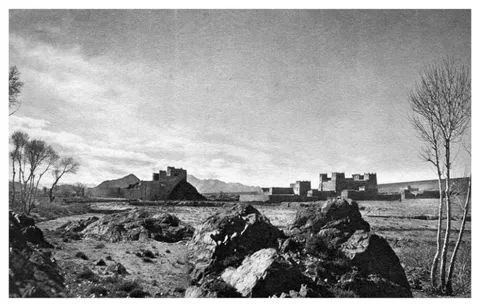 Confirmed by a verified source3 sourcesElecting a chief: the amghar n-ufillaA top chief elected each year by those who could not be elected, removable, unpaid, and whose office lapsed around 1926-1927.Read
- Confirmed by a verified source5 sourcesIgharm Amazdar, the capital“London, Paris, Washington and Igharm Amazdar”: a village of a hundred houses that was the political, judicial and sacred centre of the Aït Atta.Read
- Confirmed by a verified source2 sourcesFacing the Makhzen: distance, wars and negotiationsFor Hart, the Aït Atta always kept their distance from the central power, and their contacts with it were long bloody. Yet at the end of the nineteenth century Mulay al-Hasan I chose to negotiate with them.Read
Customary law
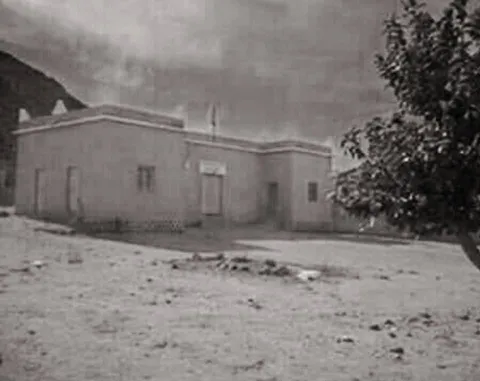 Confirmed by a verified source4 sourcesJudging: from the local assembly to the court of appealTwo-tier justice, without professional judges, protected by the sacred.Read
- Confirmed by a verified source4 sourcesThe collective oath, vendetta and blood moneyProof through the sworn word of agnates, vengeance contained by compensation.Read
 Confirmed by a verified source1 sourcesThe rule book of Igharm AmazdarA document photographed in 1961: rations owed to the shurfa, fines in measures of barley, oaths at Timjraj.Read
- Confirmed by a verified source3 sourcesProtecting, making amends, integrating: pactsBetween groups and between persons, ritual commitments (an animal's blood shed, milk shared) created protection, peace and chosen kinship.Read
- Confirmed by a verified source3 sourcesThe written custom of the Ziz qsourCollections of rules, written in Arabic with Amazigh words, organised life in the fortified villages: houses, water, theft, marriage, oath.Read
Society
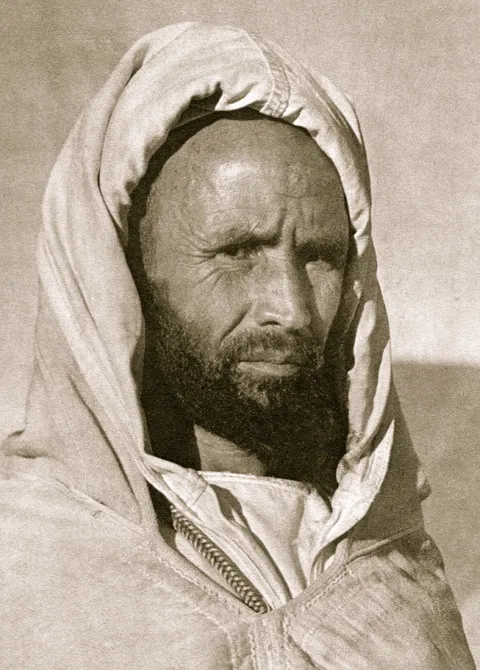 Confirmed by a verified source7 sourcesDefending the Saghro: fighters, women and familiesWhat the sources really allow us to say about the defenders of 1933 (their words, their conditions, their endurance) and what they leave unsaid.Read
 Confirmed by a verified source7 sourcesProtectors and protected: Aït Atta, Haratin and JewsIn the conquered oases, a hierarchical society based on unequal protection agreements.Read
 Unverified information4 sourcesFamilies, marriages and namesAn agnatic kinship system, names that state filiation, weddings celebrated over several days.Read
- Confirmed by a verified source2 sourcesIslam as lived: mosques, fqih and saintsScrupulous piety, dry-stone mosques, a fqih from elsewhere and two lineages of saints, the chief patron of the Aït Atta lying far from their country, near Marrakesh.Read
Economy & land
 Confirmed by a verified source5 sourcesTranshumance, oases and marketsPastoralists above all, between summer pastures in the north and winter pastures in the south, most Aït Atta were still transhumant in the 1960s.Read
- Confirmed by a verified source2 sourcesWater, fields and marketsTranshumance goes hand in hand with irrigated farming governed by water turns, and with markets held on the fringes of Aït Atta country, never at its heart. This is what Hart observed in the 1960s.Read
- Confirmed by a verified source1 sourcesThe lead of Mfis, an Ait Khebbach mineIn the mid-twentieth century, around Taouz, Ait Khebbach miners extracted the lead of the Tafilalt by hand, providing 8% of Moroccan output in 1957. The geographer J. Lefébure traces its rise and decline.Read
Culture & heritage
 Confirmed by a verified source4 sourcesIgherman: fortified villages and granariesRammed earth and stone, several storeys, guarded stores: the architecture of permanent homes.Read
 Unverified information3 sourcesDress, jewellery and languageWhite turban and beard for men, indigo veils and silver for women, a variety of Tamazight.Read
- Confirmed by a verified source5 sourcesTelling the conquest: poetry under the bombsAmazigh poems from the Central Atlas, collected after the conquest, name the aeroplane, the cannon and the disaster.Read
- Confirmed by a verified source7 sourcesAmazigh music of the south-east: voices, memory and commitmentSince the early 1990s, bands from the south-east have sung in Tamazight about language, land, exile, rights and the memory of the Saghro. The sources say where these musicians come from: none links them to the Aït Atta.Read