
The Aït Atta
People
Documented biographies. Each portrait states how reliably it has been identified; no words are attributed without a source.
Portrait of an Aït Atta man (1955) — Nationaal Museum van Wereldculturen (Tropenmuseum, Amsterdam), CC BY-SA 3.0
Major figures
Four figures put forward, each for a stated reason: what the sources say, tradition or memory.
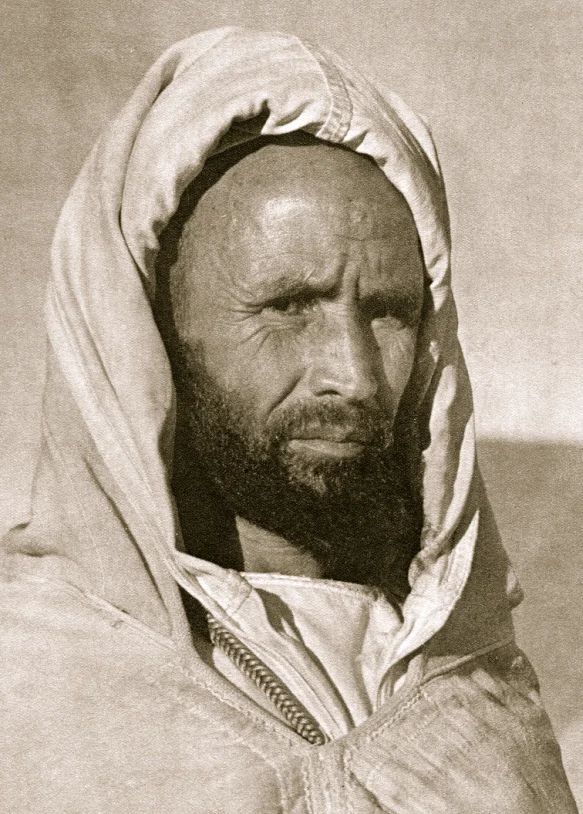 Probable attribution
Attested by the sources
Assou Oubasslam
عسو أوبسلام
c. 1890 – 16 August 1960 · Khoms of the Aït Ouahlim
The best-documented leader of the 1933 resistance: French officers of the time and the anthropologist David Hart alike name him chief of the Ilemchan and of the families who took refuge in the Saghro. He was later caid from 1939 until his death.
Read the biography
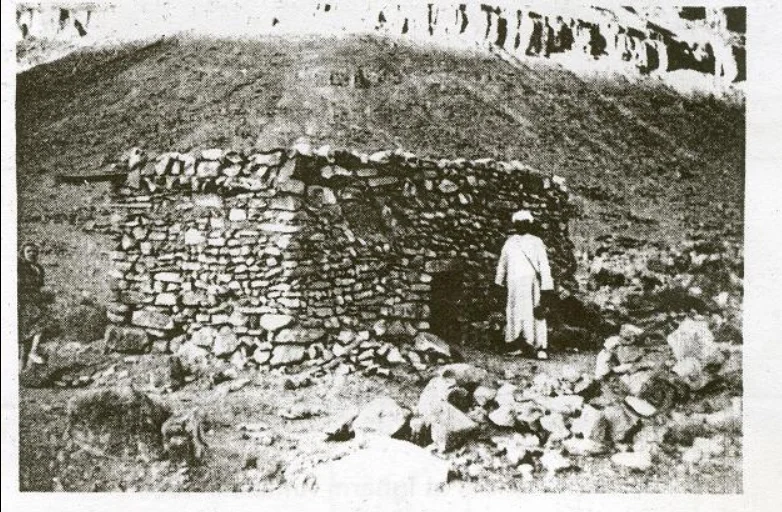 Probable attribution
Figure of tradition
Dadda 'Atta
دادّا عطا
Tradition
The founding figure after whom the confederation is named. He belongs to oral tradition: no source allows him to be treated as an attested historical person.
Read the biography
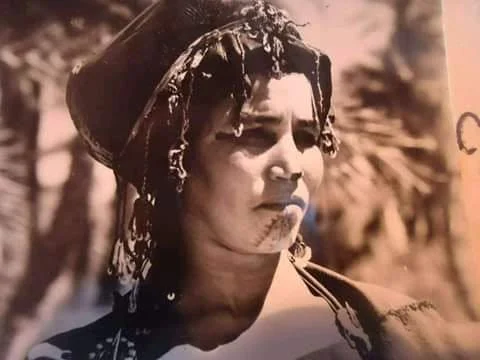 Uncertain attribution
Oral memory
Adjou Moh
عدجو موح
c. 1905 – 1933
The woman whom local memory has made a figure of the Bougafer resistance. She is known through two traditions with differing dates, not through the 1933 archives.
Read the biography
- Portrait not documented
Attested by the sources
Hammou ou Lahsen ben Merghi
حمو أولحسن بن مرغي
c. 1860 – ? · Khoms of the Aït Ouahlim
One of the last amghar n-ufilla, the elected supreme chiefs of the whole confederation, before the office ceased to be filled around 1926-1927 (Spillmann).
Read the biography
All figures
Filter by role, period or section, or by whether a portrait exists. One person can have several roles.
- Assou Oubasslam Chief of the Ilemchan (Aït Atta), principal leader of the resistance in the Saghro in 1933.
- Henry de Bournazel Captain commanding a sub-group of goums and partisans in the Giraud group; killed on 28 February 1933.
- Antoine Huré General, commander-in-chief of the troops in Morocco (1931-1934); commander-in-chief of the Saghro operations.
- Georges Catroux General, at the head of the Marrakesh mobile group, west of the Bou Gafer.
- Henri Giraud General, at the head of the Confins mobile group, east of the Bou Gafer.
- Thami El Glaoui Pasha of Marrakesh, ally of the Protectorate; his harkas fought the Aït Atta before 1933.
- 'Ali u-l-Hajj 'Assu n-Ait Bâslâm Qaid of Ikniouen in 1961, of the Ilemchan clan; he allowed Hart to photograph the qânûn of Igharm Amazdar.
- Dadda 'Atta Founding, eponymous figure of the Ait Atta tradition, not a demonstrated biological ancestor.
- Moulay 'Abdallah bin l-Hsain Patron saint of the Aït Atta, buried at Tamslouht; tradition credits him with authorising the codification of their customary law.
- David Montgomery Hart American anthropologist, principal ethnographer of the Aït Atta (fieldwork in 1961-1962, 1965 and 1975).
- Georges Spillmann Native Affairs officer in Morocco (from 1920), author of “Les Aït Atta du Sahara et la pacification du Haut Dra” (1936).
- Charles de Foucauld Explorer; crossed the western Saghro in 1883-1884 and published Reconnaissance au Maroc (1888).
- Jean Robichez French officer; collected Amazigh poems on the conquest of the Central Atlas between 1936 and 1938 and published the album Maroc central in 1946.
- Zayd ou-Skounti War leader of the Ayt Ayssa Izem (Ait Merghad), main figure of the last stronghold on the Baddou in August 1933.
- Ou-Sidi de Tilmi War leader of the Ait Hdiddou, described by Peyron as the eastern resistance's “charismatic leader of men”.
- Ali ou Termoun Named among the leaders of the Baddou resistance by the Moroccan press and Wikipedia.
- Zayd ou-Hmad Ait Merghad man who carried on the armed struggle with two or three companions until spring 1936.
- Sidi Lmekki Amhaouch Marabout, central figure of the siege of Tazizaout (August-September 1932).
- Ali ou Adda Ait Atta intermediary in the negotiations of 24-25 March 1933.
- Adjou Moh A woman of the Saghro whom local memory makes a figure of the Bougafer resistance (1933).
- Mohaddach ould el Hajj Faska Notable of the Aït Bou Iknifen, ally of the Glaoui in the upper Dadès and the Todgha from 1919.
- El Hajj Faska “Cheikh-el-ʿam of the Aït ʿAtta” in 1919; Beaurpère calls him the “champion of the Glawa cause” from that date.
- Hammou ou Lahsen ben Merghi Former amghar n-ufilla of the Aït Atta, one of the three notables of the Aït Ouahlim around 1930.
- Khouya Mimoun Old leader of the Nkob, hostile to any tutelage, the Makhzen's as well as the Glaoui's.
- Basso ou Mimoun n'Aït Lfmaz Son of Khouya Mimoun, close to the Makhzen and the Glaoui around 1930.
- Idir ou el Hajj el Msoufi Former amghar n-ufilla of the Aït Atta; he drew his tribe towards the Glaoui.
- Basso ou Baslam Brother of Assou Oubasslam; Spillmann names the two brothers as leaders of the resistance in the Saghro in 1933.
- Bouichou Notable of Alnif, descendant of the tribe's imzouaren, “the first”.
- Mohammed ou Bani Renowned old fighter of the Aït Khebbach, loyal to Belqasem Ngadi.
- Lieutenant Bel Madani Interpreter for General Huré with the Aït Atta in March 1933; photographed with Assou Oubasslam at Tinghir after the fighting.
- Mbarek Oularbi « Nba » Singer, guitarist and flautist, founder and leader of Saghru Band (2006-2011).
- Moha Mallal Poet, singer and painter; founder of the band Mallal, whom Granci presents as the initiator of the modern Amazigh scene of the south-east.
- Omar Derouich Poet and teacher, author of lyrics for south-eastern bands (Imenza, Saghru Band).